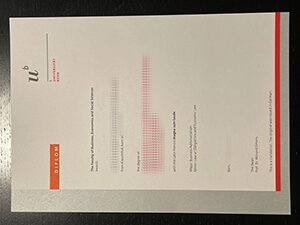


In 1528, during the turmoil of the Swiss Reformation, the city of Bern established a theological college to train Protestant clergy. Universitat Bern diploma, Universitat Bern degree, Universitat Bern certificate. It began with just three professors. Today, nearly 500 years later, that small school has become one of Europe’s leading research universities—an institution that collaborates with NASA, ranks among the top 110 globally, and shapes everything from climate law to the study of how planets form.
For its first three centuries, the institution remained a modest theological and humanistic school. By the 18th century, it had established dominance in theology and humanities. But the transformation to a modern research university was gradual.
It was not until the 19th century that the institution broadened its scope, adding faculties of law, How to order a Universitat Bern certificate online? medicine, and the natural sciences—the foundations on which its current research reputation is built.
Today, the university serves more than 30,000 students and employs more than 1,200 scientists whose research is tracked across 13 major academic fields.
Its H-index rankings reflect a concentration of top researchers: physicist Antonio Ereditato, with an H-index of 231; epidemiologist Matthias Egger, with 208; and pathologist Mark A. Rubin, with 189. #Get a Universitat Bern degree online, Replica a Universitat Bern certificate online. These are not administrative appointments; they are active researchers whose work influences their fields globally.
The university has identified five National Centres of Competence in Research (NCCRs), each representing a strategic area of excellence: International Trade Regulation, Membrane Biology, Molecular Ultrafast Science and Technology, the Formation and Development of Planetary Systems, and RNA and Disease. These are not nominal designations; they are competitive grants that signal where the institution’s research capacity is concentrated.
Where to buy a Universitat Bern certificate online?
The NCCR PlanetS project, for example, reflects a long-standing research connection to space science that is unusual for a university of Bern’s size. The university’s physics institute contributed to the first human lunar exploration and continues to provide instruments and analytical data for NASA and ESA missions. This is not a symbolic association; it is a working relationship that has persisted for decades.