

Whether it’s for a theatrical production, a personal milestone replacement, or a “gag” gift that needs to look the part, not all replicas are created equal. Quality Diploma Replica. If you’ve ever held a cheap imitation, you know the feeling: the paper is too thin, the ink looks “flat,” and it lacks that certain gravitas of an official document.To ensure you are getting a high-end product, you need to look beyond the surface.
Here is how to identify a truly premium quality diploma replica.
1. The Foundation: Document Texture and WeightThe most immediate giveaway of a low-quality replica is the paper.
Standard printer paper or thin cardstock simply won’t cut it. Replica diploma certificate. Parchment and Linen: Premium replicas use authentic heavyweight parchment or linen-textured paper.The “Snap” Test: When you flick the corner of the document, it should have a crisp, firm “snap” rather than a limp thud.Color Accuracy: Authentic diplomas rarely use “bleached white.” Look for off-white, cream, or light ivory tones that mimic the aging process of professional grade vellum.
2. The Golden Standard: Raised Metallic SealsThe seal is the heart of the document.
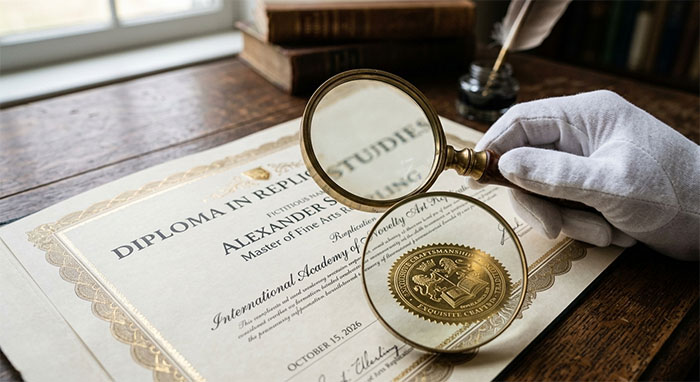
Most budget services will simply print a yellow or “gold-colored” circle directly onto the paper. Buy a fake degree. A premium replica, however, treats the seal as a 3D element.Embossing: You should be able to feel the texture. High-quality replicas use die-cast embossing, where the paper is physically pressed between two molds to create a raised surface.Gold Foil Fusion: Instead of ink, look for metallic gold foil. This provides a reflective, mirror-like finish that catches the light exactly like a university’s official crest.Alignment: In premium work, the seal is perfectly centered within the embossed border, with no “bleeding” of the foil.
3. High-Resolution TypographyOfficial diplomas often use intricate, Old English, or Gothic fonts.
Low-resolution replicas often suffer from “pixelation” or “bleeding” around the edges of the letters.FeatureBudget ReplicaPremium ReplicaEdge ClarityFuzzy or jagged edgesRazor-sharp, clean linesInk DepthFlat, matte appearanceRich, “raised” feel (Thermography)AlignmentOften slightly skewedPerfect horizontal and vertical trackingPremium providers use high-definition vector graphics rather than scanned images, ensuring that even the smallest “micro-print” remains legible under a magnifying glass.
4. The Human Touch: Realistic SignaturesA common mistake in replicas is using a single “font” for the signatures of the Dean or Registrar.
On a high-quality document, the signatures should look like they were written with a fountain pen.Pro Tip: Look for “ink variation.” Real signatures have slight thickness changes and pressure points. Premium replicas mimic this by using specialized plotting or high-end layering techniques rather than a flat, digital stamp.
SummaryA premium replica is a symphony of tactile details. From the texture of the document to the shimmer of the security seals, every element should scream “official.” If it looks like it came out of a home inkjet printer, it’s not premium.Would you like me to help you draft a checklist for comparing different replica providers?