

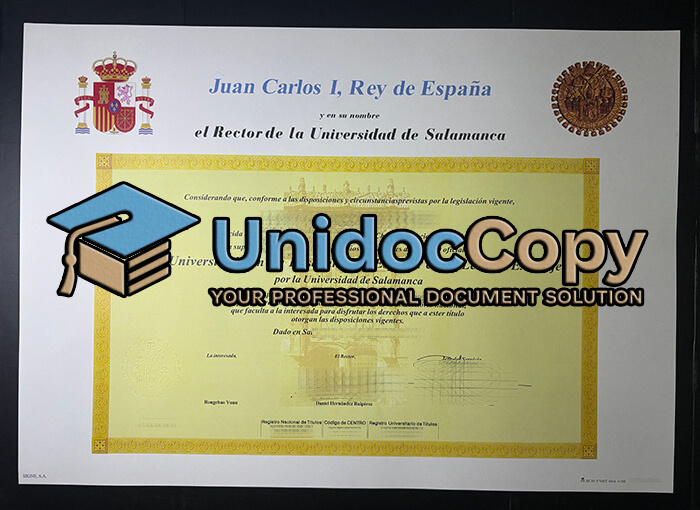
Nestled in the ancient city of Salamanca, Rector de la Universidad de Salamanca diploma, Replica a Rector de la Universidad de Salamanca certificate online. where sandstone buildings glow gold in the afternoon light and the echoes of nearly a millennium of scholarship reverberate through cobblestone streets, an institution that shaped the modern world continues its mission under the leadership of a figure who embodies its enduring legacy.
The Rector of the University of Salamanca stands at the helm of the oldest university in Spain and the third oldest in Europe still in continuous operation, a position that carries both the weight of history and the responsibility of shaping the future of higher education in the Spanish-speaking world.
The rectorship of the University of Salamanca is one of the oldest continuously existing academic offices in Europe. How do i buy Rector de la Universidad de Salamanca degree? The exact date of the office’s creation remains a matter of historical debate, but scholars trace it back to the reign of Alfonso X el Sabio in the 13th century, when the university was given its formal title and structure.
In its earliest incarnation, the rector was elected by a council of eight consiliarios, who represented four regional “nations” of the Iberian Peninsula. This democratic tradition, established in the university’s foundational statutes, placed the rector in a unique position: elected by and accountable to the academic community, yet wielding considerable authority over university governance.
The early statutes stipulated that the rector must be a noble, a native of Castile or León, I want to buy Rector de la Universidad de Salamanca certificate. and could not be a member of the clergy or a professor—requirements designed to ensure that the rector represented the interests of the students rather than the institutional establishment.
The office carried immense prestige; scions of Spain’s most distinguished families, including the Zúñigas, Ponce de Leóns, and even the Count-Duke of Olivares, served in this role during the university’s golden age of the sixteenth and seventeenth centuries.
The rector’s duties were formidable: presiding over all academic assemblies, attending degree examinations, overseeing the assignment of topics for professorial competitions, and even receiving the oath of obedience from each matriculating student. The rector was also responsible for visiting classes to ensure compliance with academic regulations.