

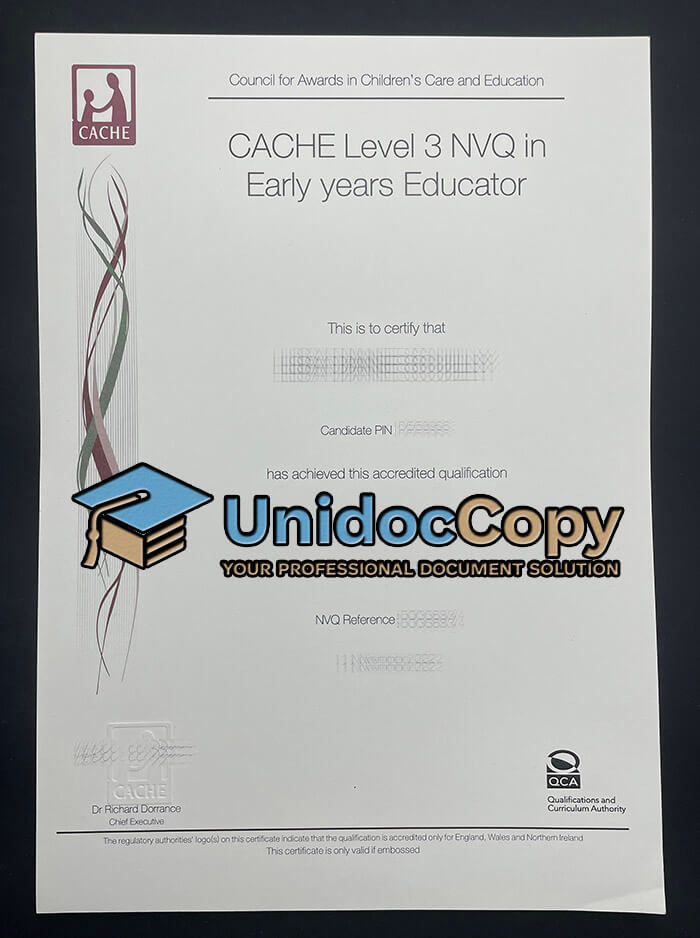
In the landscape of vocational qualifications for the early years and care sectors, few credentials carry the weight and recognition of the CACHE Level 3 NVQ. CACHE Level 3 NVQ diploma, CACHE Level 3 NVQ degree, CACHE Level 3 NVQ certificate. As one of the United Kingdom’s most respected professional qualifications, it represents far more than a certificate on a wall—it is a testament to competence, a gateway to career advancement, and a benchmark of quality that employers across the country actively seek.
CACHE—the Council for Awards in Children’s Care and Education—has been a leading awarding body in the UK for decades. Their qualifications are regulated by Ofqual, the government body that oversees qualifications, examinations, and assessments in England. When you earn a CACHE Level 3 NVQ, you are not receiving a generic certificate; you are joining a recognized community of professionals whose competence has been verified against rigorous national occupational standards.
Unlike purely academic qualifications that test theoretical knowledge through written examinations alone, the NVQ (National Vocational Qualification) framework is fundamentally different. It assesses what you can do in a real work environment, not merely what you know. This fundamental difference makes the CACHE Level 3 NVQ uniquely valuable to employers—it provides direct evidence of workplace competence, not just classroom learning.
How to make the CACHE Level 3 NVQ certificate online?
The CACHE Level 3 NVQ is offered across several specializations, with the most prominent being:
Children’s Care, Learning and Development — Designed for practitioners working with children aged 0 to 16 years in settings where children’s care, learning, and development is the primary purpose.
Health and Social Care — Focused on learners who work with or wish to work with children and young people in health and social care settings. How much to buy CACHE Level 3 NVQ diploma online?
Playwork — For those working with children and young people between 4 and 16 years in play environments, often in supervisory roles.
The qualification structure is built around mandatory core units and optional specialist units, allowing learners to tailor their qualification to their specific role and career aspirations.